

The Science Behind Agarwood Formation
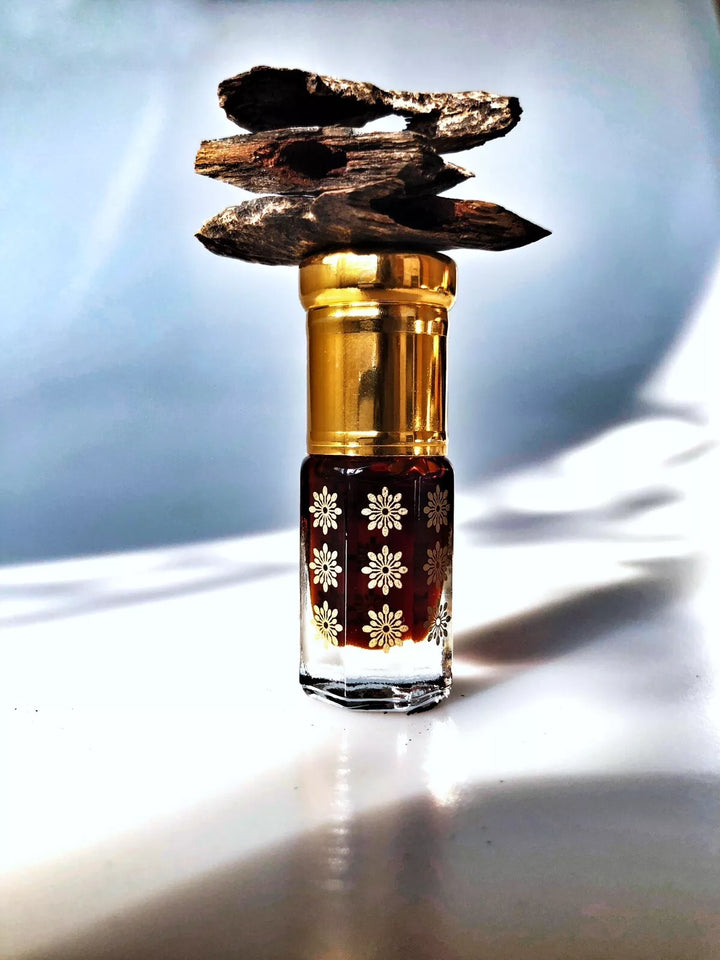
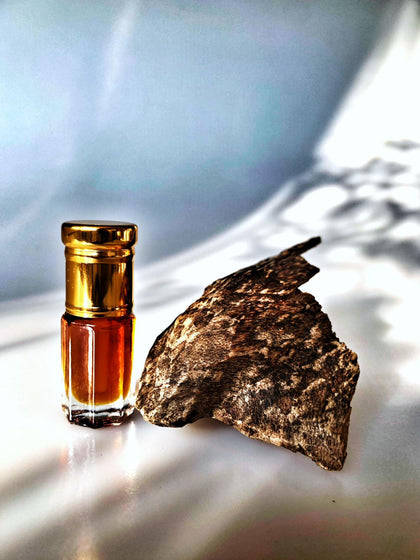
Agarwood – the dark, aromatic resin of the Aquilaria tree – is one of the most fascinating natural materials in the world. But how does the coveted oud actually come into being? What happens biologically when a tree under stress produces this precious resin? In this article we dive into the science behind agarwood formation.
The Aquilaria tree
The genus Aquilaria comprises 15 species that grow in South and Southeast Asia. The most important for oud production are:
- Aquilaria malaccensis: The classic species, mainly India, Bangladesh, Indonesia
- Aquilaria crassna: Cambodia, Vietnam, Laos
- Aquilaria sinensis: China, Hainan
- Aquilaria beccariana: Borneo, endemic
- Aquilaria microcarpa: Southeast Asia, small-growing
The habitat
Aquilaria trees grow in tropical rainforests at 0–750 m altitude. They prefer well-drained soils, high humidity (80–90%) and temperatures between 20–32°C. A mature tree reaches 20–40 m in height and lives 100–200 years.
The standard biology: a healthy tree
A healthy, undisturbed Aquilaria tree produces no agarwood. Its wood is pale, soft and unaromatic – similar to other tropical hardwoods. The resin from which oud is distilled is a defence reaction, not a normal component of the wood.
The infection mechanism
The triggers
Resin formation begins when the tree is injured and a specific fungal infection sets in. The triggers can be:
- Insect infestation: Beetle larvae bore into the wood
- Forces of nature: Lightning strike, storm damage
- Mechanical injury: Branches break, trunk injured
- Fungal spores in the wind: Specific fungal species
The fungal species involved
Mainly responsible are:
- Phialophora parasitica: The most important agarwood-inducing species
- Fusarium solani: Frequent secondary infector
- Penicillium species: Contribute to the complexity
- Chaetomium globosum: Rarer, but very aromatic
The biochemical reaction
Phase 1: pathogen recognition
The tree recognises the fungus through chemical signals and activates its defence system. Specific genes responsible for the production of protective substances are upregulated.
Phase 2: secondary metabolite production
Over years, the tree produces hundreds of different secondary metabolites that accumulate in the infected wood tissue. The most important are:
- Sesquiterpenes: Woody-warm notes (agarol, agarotriol)
- Chromones: Sweet, honey-like notes
- Phenols: Smoky, animalic facets
- Triterpenoids: Balsamic depth
Phase 3: maturation
Over years to decades, the resin continues to mature in the wood. Complex chemical reactions (oxidation, ester formation, polymerisation) create the unique fragrance complexity.
Wild vs. plantation
Wild agarwood
Wild-growing Aquilaria trees are infected by natural events. The fungal strains are diverse, the infection progresses slowly and irregularly. Result: the most complex scent profiles, but extremely rare (only 5–10% of all wild trees develop resin).
Plantation induction
Modern plantations induce infection artificially through various methods:
- Drilling method: The trunk is drilled, fungal culture injected
- Nail method: Rusty nails driven into the trunk
- Chemical induction: Salts or hormones to create stress
- Fire induction: Branches are set alight
Quality differences
Wild agarwood usually has deeper, more complex scent profiles than plantation material. But modern plantations with good fungal strains and long maturation times now produce very respectable qualities.
From bark to oil: the distillation process
Harvest
The tree is felled and the wood is examined for resinous sections. Experienced workers recognise the dark, aromatic parts by smell and colour.
Sorting
The resinous wood is sorted by quality. Higher grades (Kinam, Kyara) are burned directly as incense; lower grades are distilled.
Soaking
The wood is chopped and soaked in water for 2–6 weeks. During this time a slight fermentation begins that increases the fragrance complexity.
Steam distillation
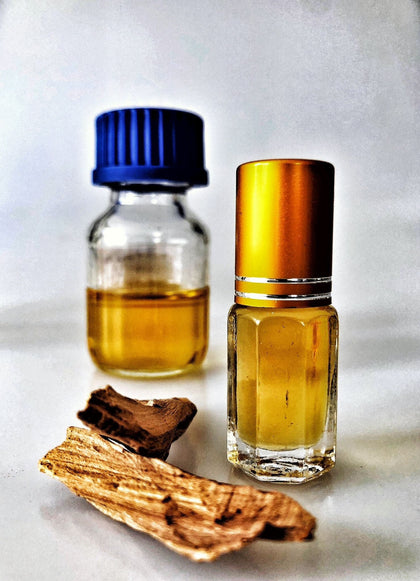
The soaked wood is boiled with water in copper stills. Steam carries the scent molecules out of the wood, is cooled and condenses. The distillate separates into two phases: water and oud oil (which is lighter and floats on top).
Distillation fractions
- First fraction (head): The first 30 minutes, fresh and citrusy
- Middle fraction (heart): 1–4 hours, warm and resinous
- Last fraction (base): 4–12+ hours, deep and animalic
Modern premium distillations combine all fractions for a complete profile. Lower grades use only certain fractions.
The future of agarwood production
Tissue culture
Researchers are working on the targeted culture of resin-producing Aquilaria tissue in laboratories. Small-scale successes have been documented so far, but industrial scale has not yet been reached.
Biotech synthesis
Individual oud molecules can today be obtained biotechnologically from yeasts or bacteria. This does not replace the complexity of the natural material – it extends the fragrance palette.
Sustainable plantations
Duftkumpels relies on direct sourcing on site instead of anonymous supply chains.
Duftkumpels' sourcing: Founder and perfumer AttarG buys his Cambodian oud directly from distillers on site. Since some batches are only available in tiny quantities, he processes them personally in his Hamburg atelier into handcrafted, numbered editions.
Frequently asked questions
How long does agarwood formation take?
Why don't all Aquilaria trees produce resin?
Can agarwood be synthesised?
What determines the quality of the finished oud oil?
Does wild agarwood differ from plantation agarwood in scent?
Read on: