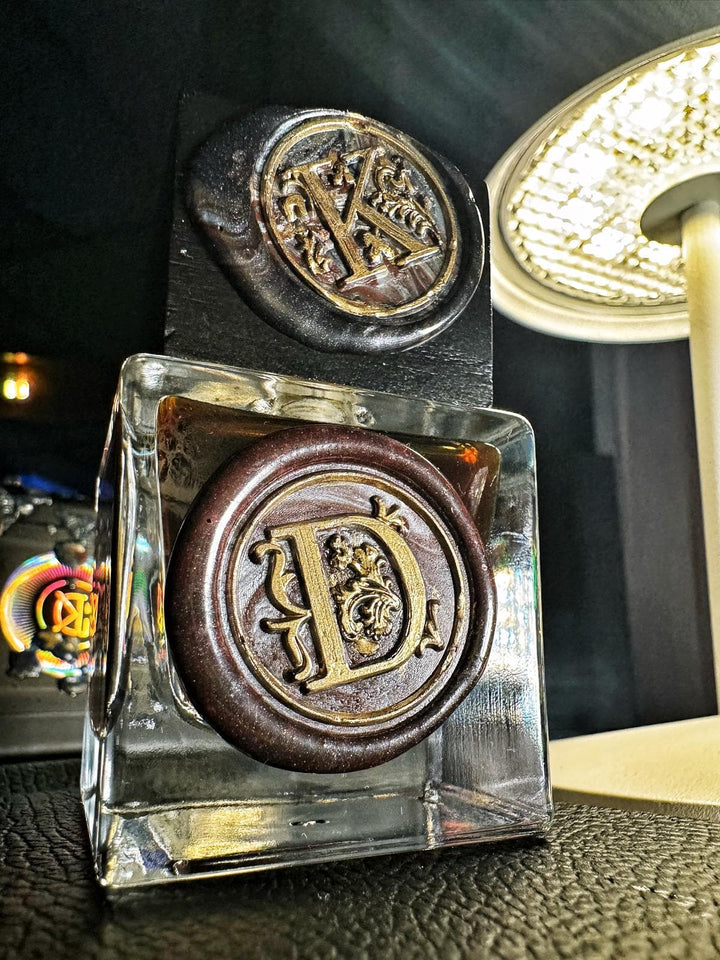
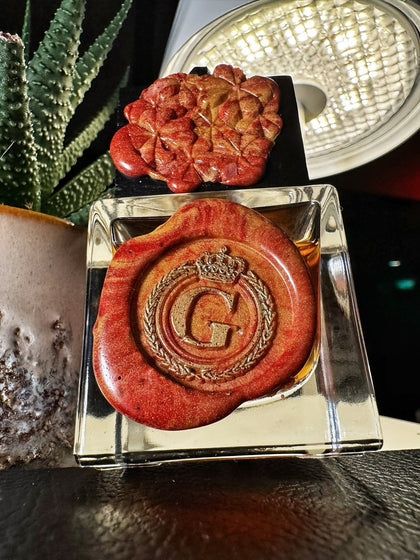
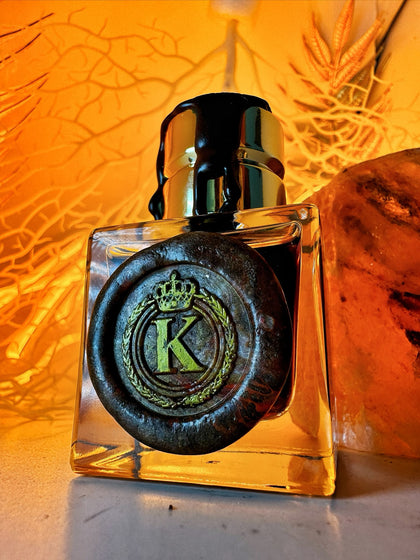
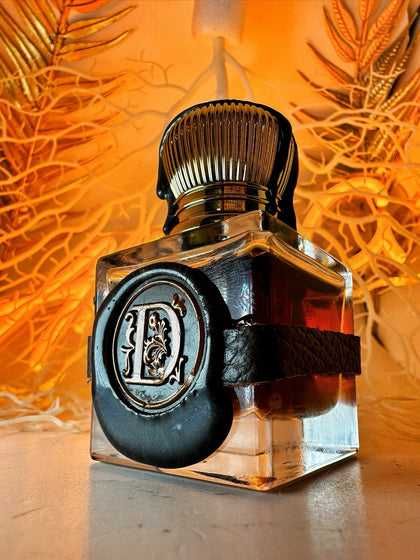
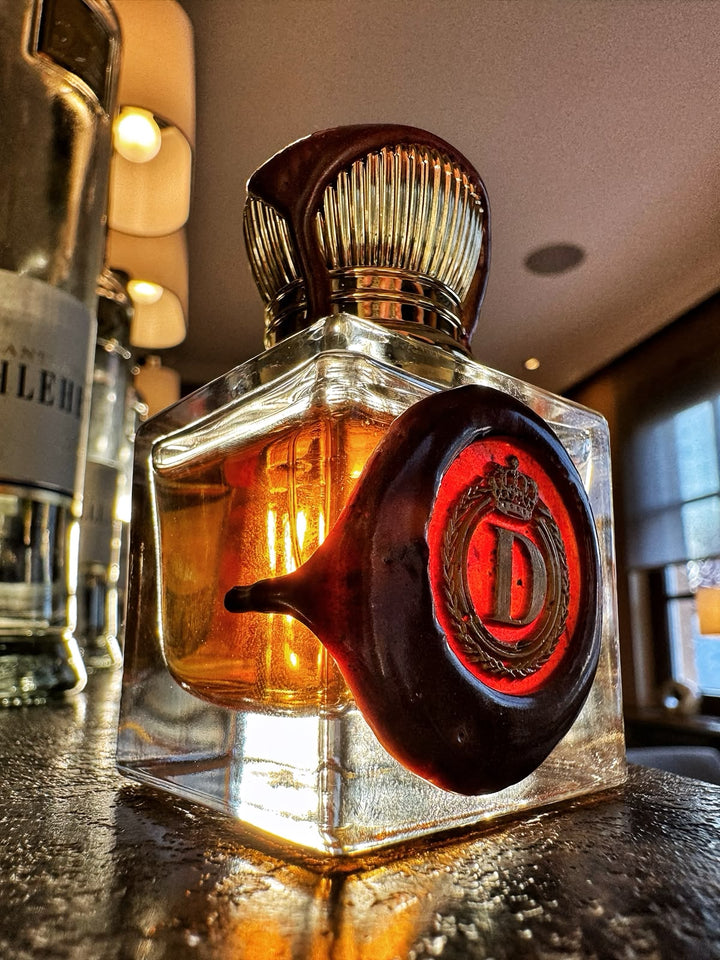
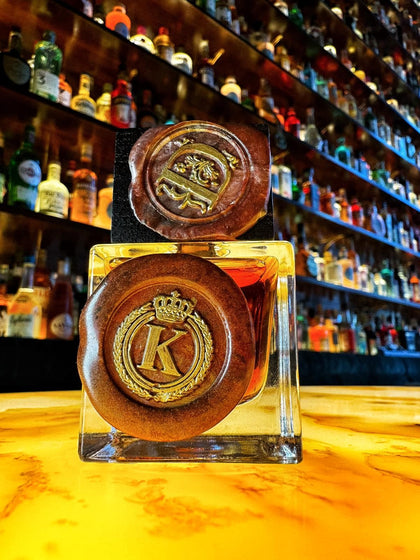
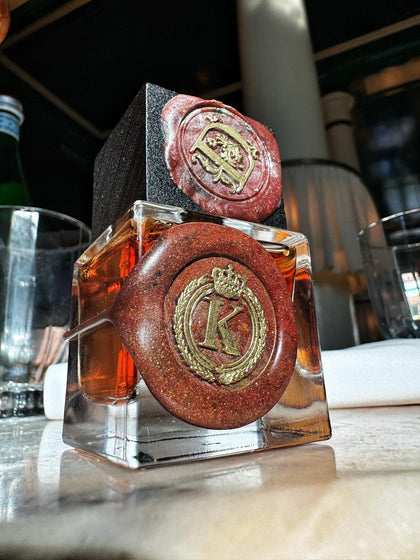
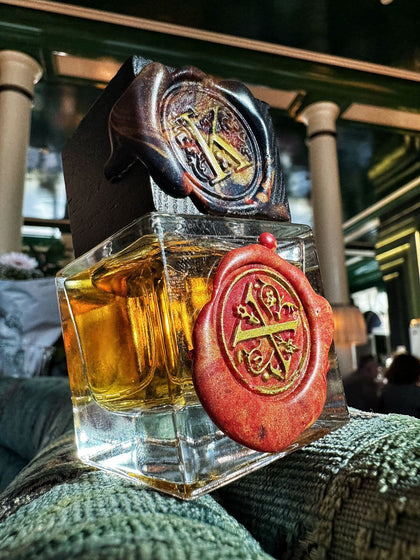
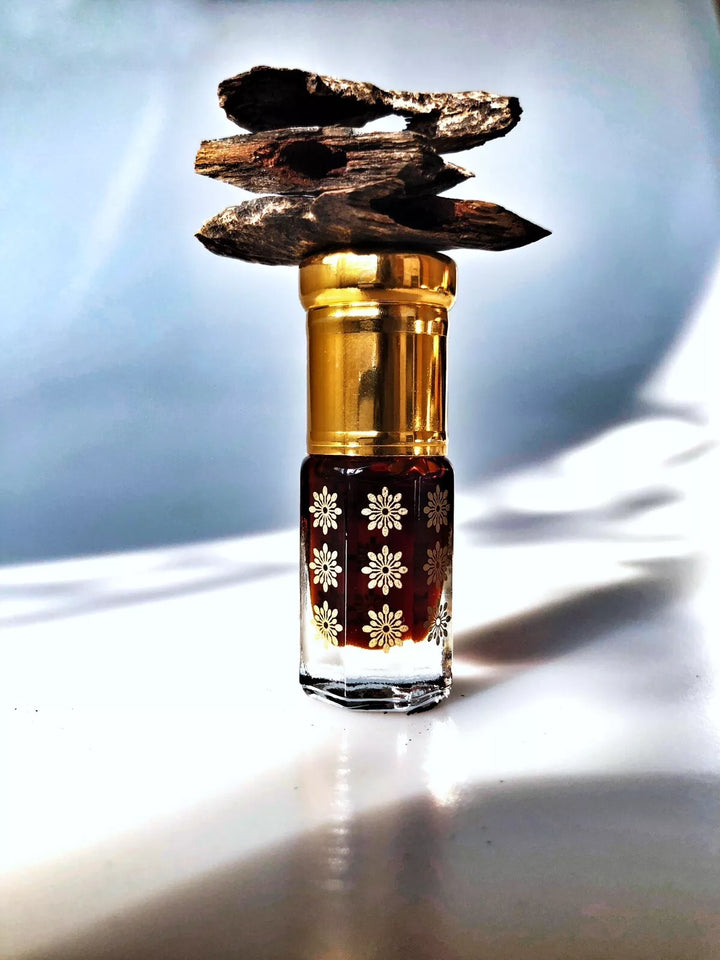
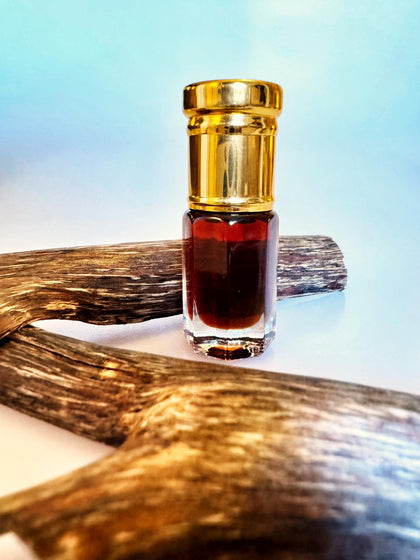
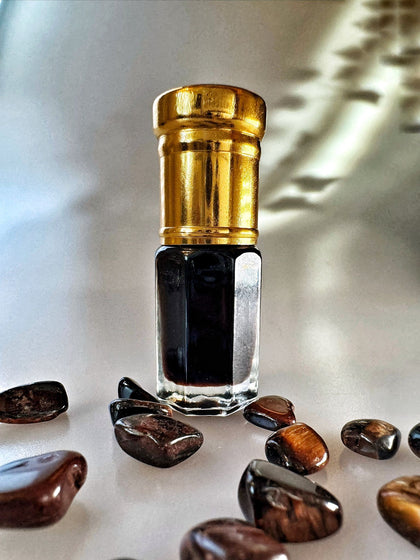


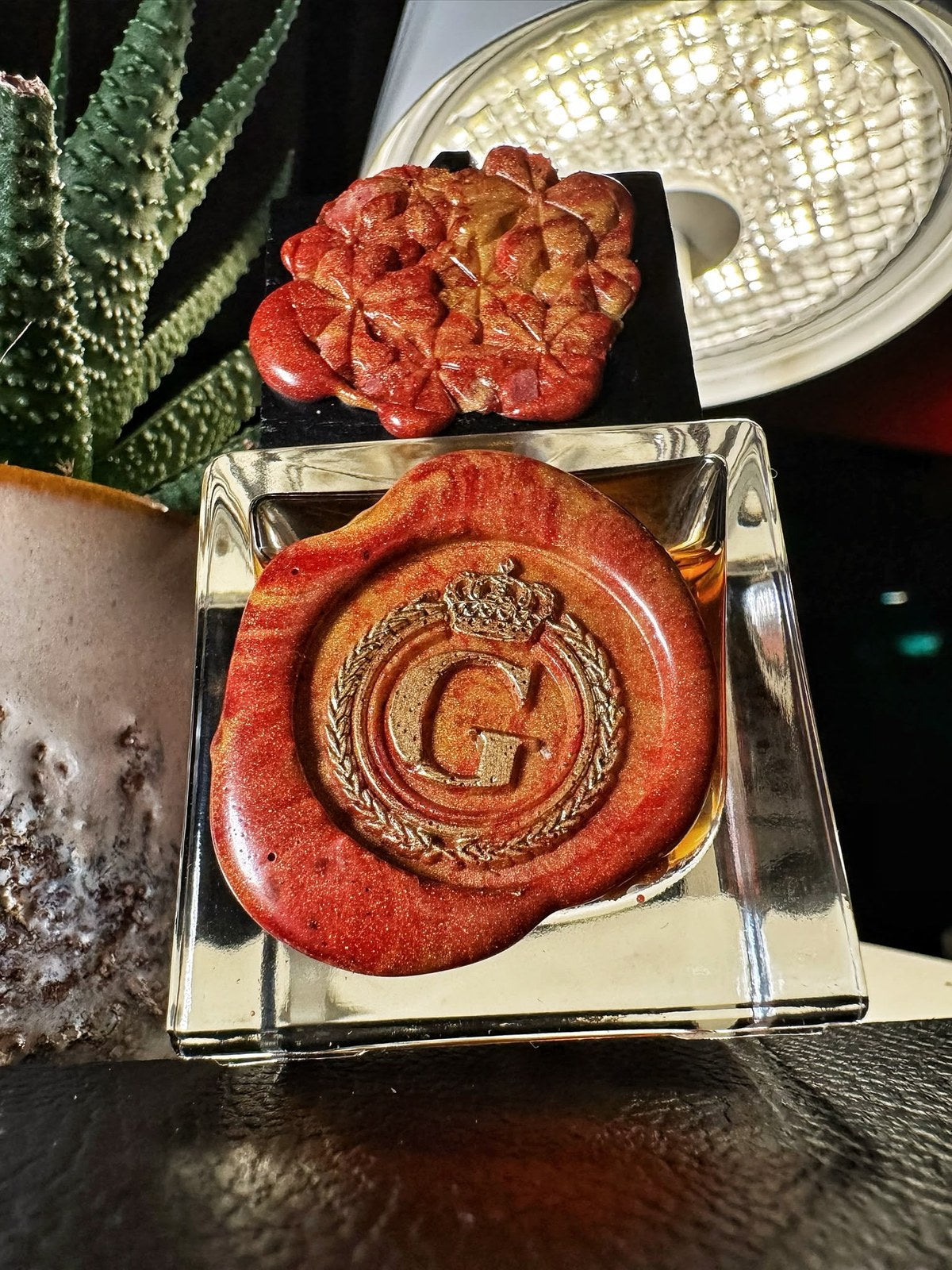
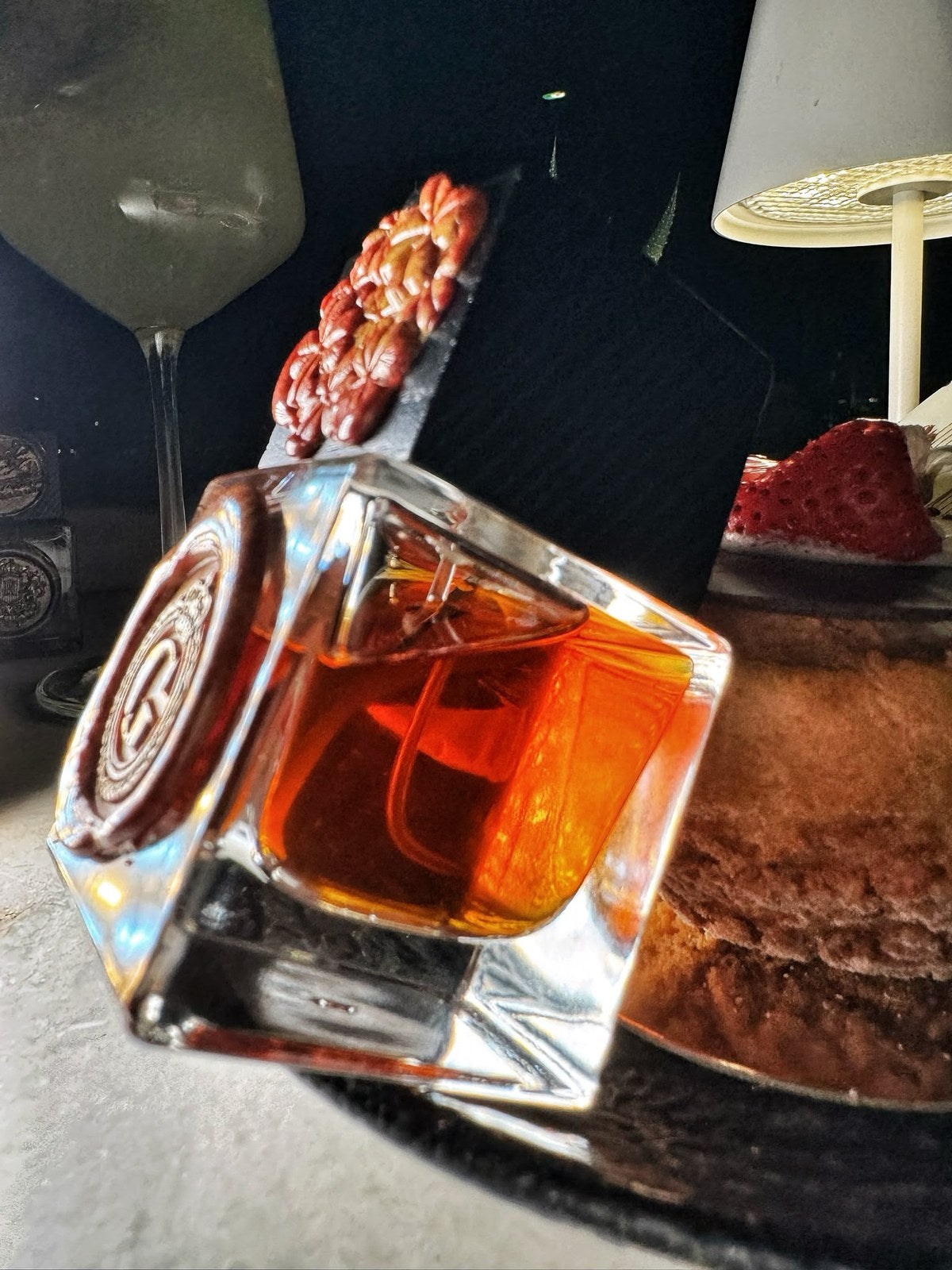
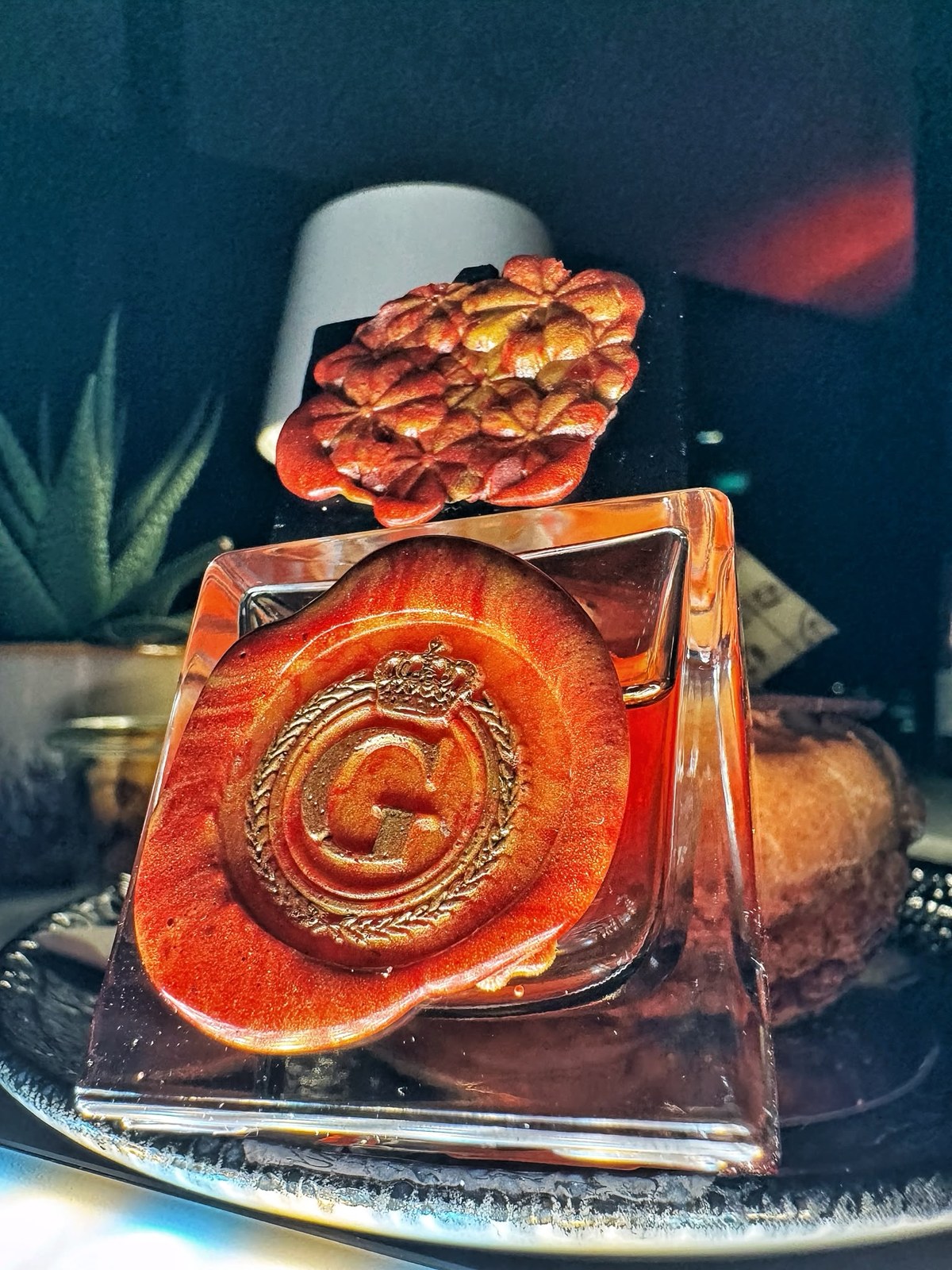
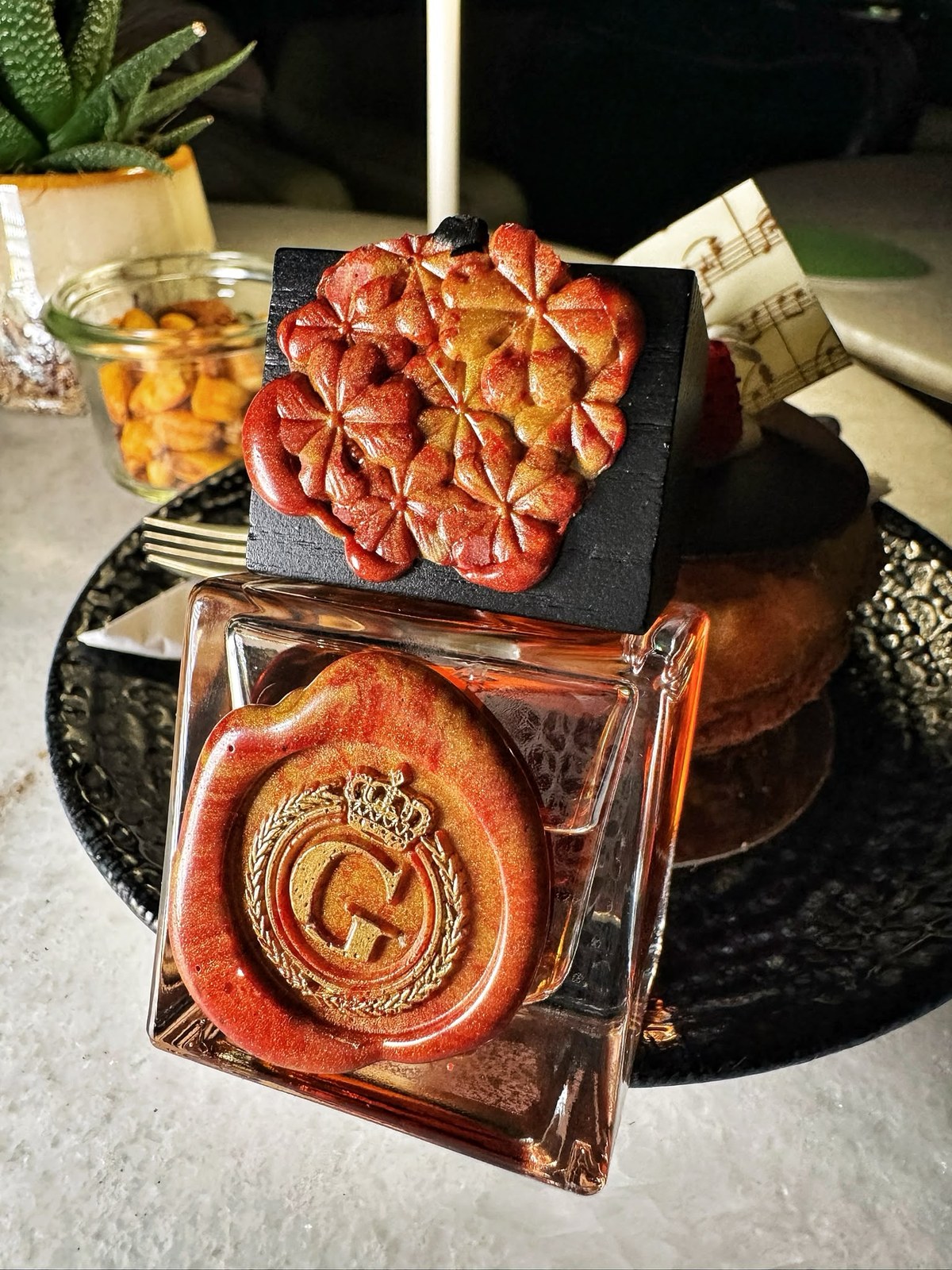
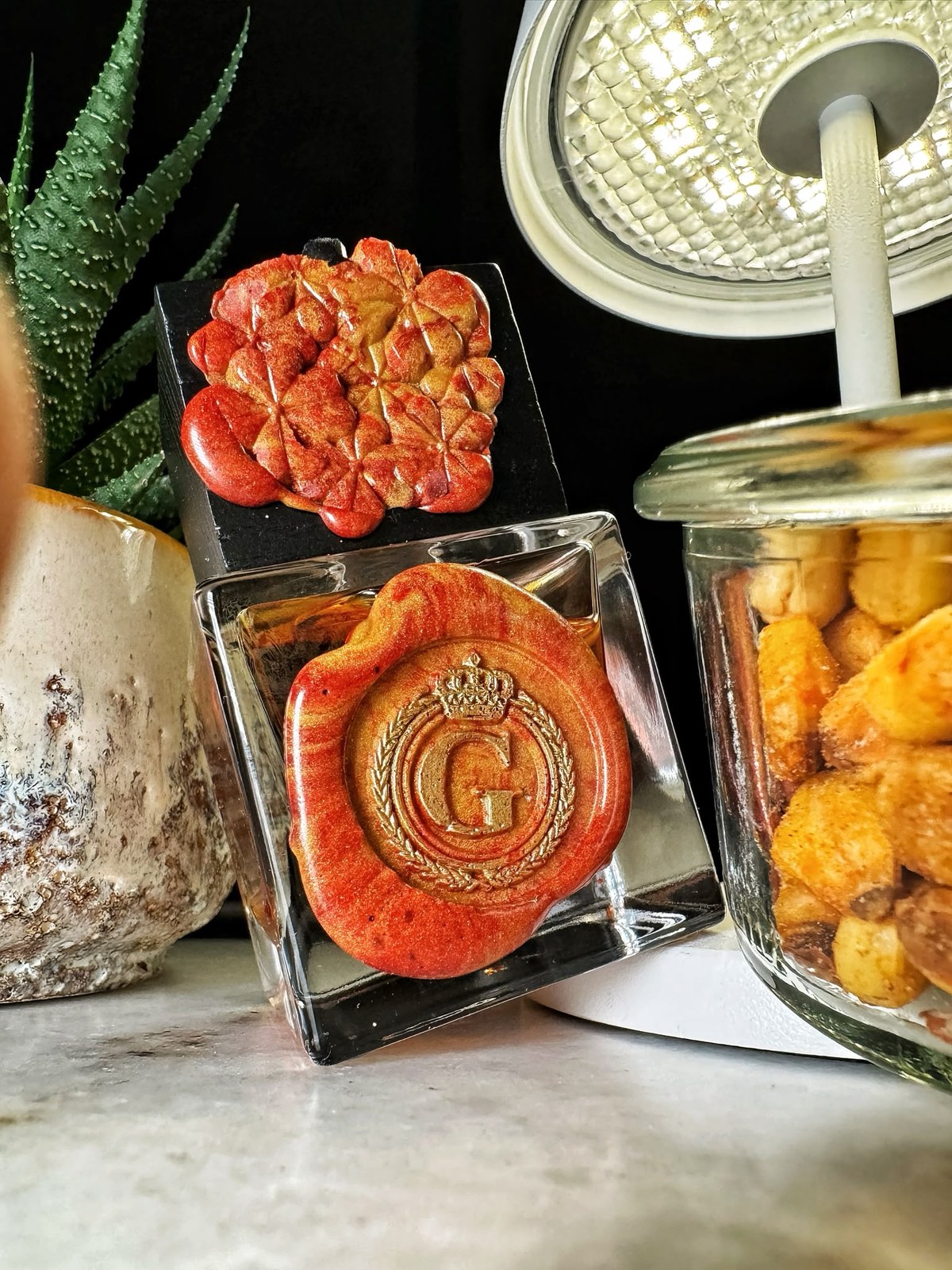
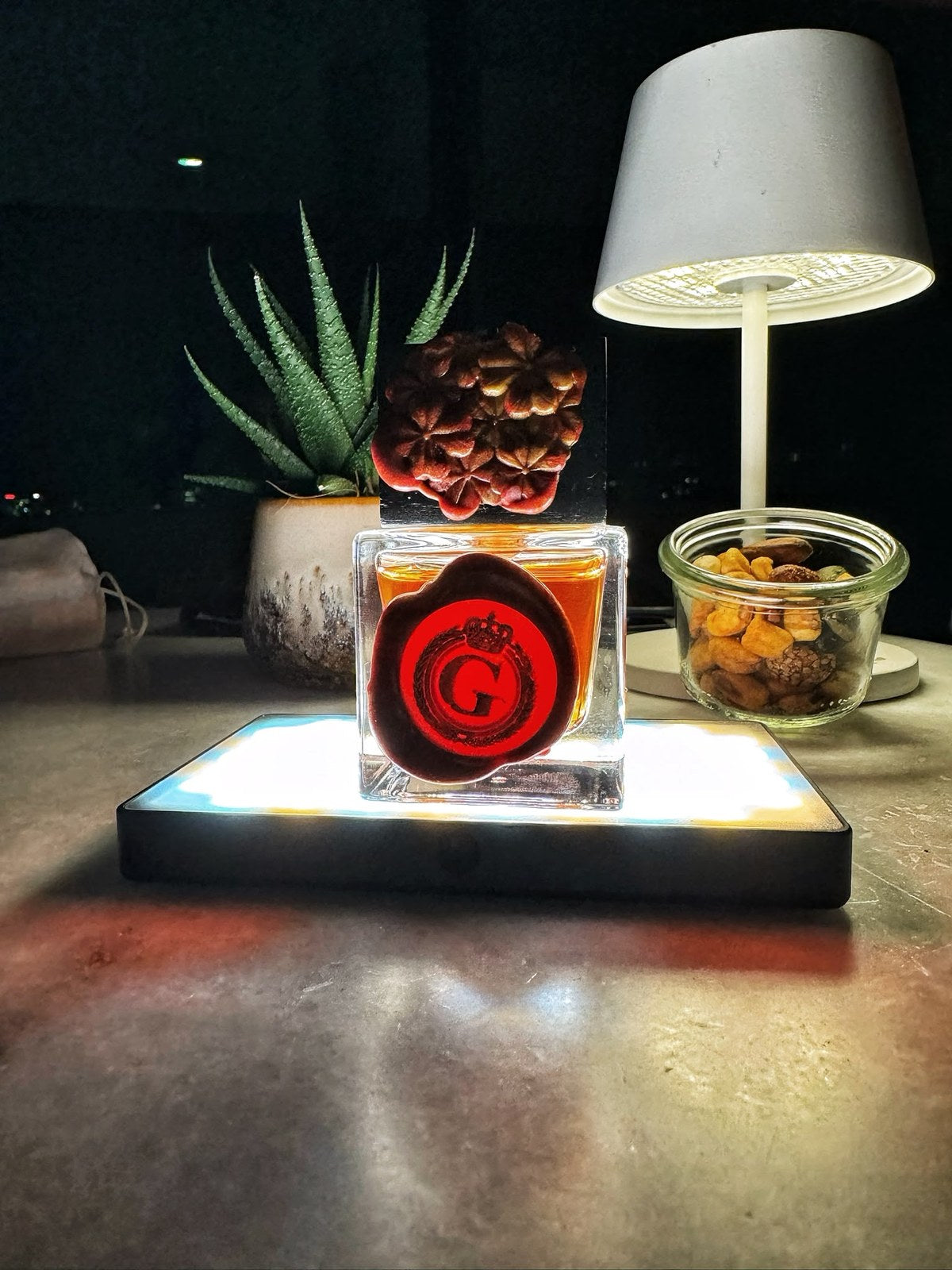
Patchouly Rouge
Shipping to Germany: €7,90 — free from €350,00
14-day return policyMade to order, 4-6 working daysHandcrafted in Hamburg
PATCHOULY ROUGE – Extrait de Parfum
What makes Patchouly Rouge a singular composition?
Patchouly Rouge is based on the original formula of the attar of the same name from 2014, created in Lahore. The idea behind it was unusual: not to stage patchouly as a dark, earthy or woody raw material, but to place its floral, radiant and almost hypnotic side at the centre.
The inspiration for this reaches back into the great perfume era of the Mughal dynasties. For centuries, Lahore and Delhi were centres of a fragrance culture in which precious natural essences were not understood as a fleeting cosmetic product, but as an expression of luxury, spirituality, power and personal identity.
During the Mughal period, oud, sandalwood, rose, jasmine, ambergris and numerous other precious natural materials were part of the olfactory repertoire of the courtly elite. Since alcoholic perfume bases played no role in the Islamic fragrance tradition, numerous compositions were created on a pure oil base: attars, in which natural essences merged with one another and were able to mature over long periods of time.
Patchouly Rouge takes up this historical idea, but interprets it entirely anew.
At its centre stands an extraordinary quartet of different patchouly qualities. Around it a floral body forms from Jasmine Sambac, Jasmine Grandiflorum and tuberose, carried by creamy Mysore sandalwood, vanilla absolute and tonka absolute. Vintage labdanum, beeswax absolute and finely dosed animalic natural materials give the composition its depth and suppleness.
The result is not a dark patchouly. Not a dry patchouly. Not an earthy, musty patchouly.
It is Patchouly Rouge.
A floral, balsamic and powdery patchouly whose radiance is brought into an exceptionally supple form by white blossoms, woods, vanilla and tonka.
Particularly fascinating is its changeable effect on the skin. The composition possesses a pronounced skin dependency: on different skin chemistry, the floral, balsamic, woody and animalic facets can emerge to varying degrees. As a result, Patchouly Rouge can appear distinctly more feminine on one skin, while on another skin it acts more masculine, drier or woodier.
Not as an artificially constructed gender assignment, but as that which has always distinguished high-quality natural perfumery: a composition that works with its wearer.
Ingredients
Patchouly
Vintage Patchouly – Indonesia
Ultra Vintage Patchouly – Indonesia, 2000
Vintage Patchouly – India, 2008
Woods
Sandalwood – Mysore, India
Balsamic & gourmand raw materials
Vanilla Absolute – Madagascar
Tonka Absolute – Brazil
Vintage Labdanum – Crete, 2002
Beeswax Absolute – France
Floral essences
Jasmine Sambac – India
Jasmine Grandiflorum – India
Tuberose – India
Animalic natural materials
Grey Ambergris – Bahamas
Vintage Civet Musk – India, 2010
Castoreum – Siberia
Development on the skin
Patchouly Rouge is a true projection monster.
Even the first contact with the fragrance does not feel like a single top note slowly emerging from the mist. Rather, a complete olfactory symbiosis opens up.
A wall of fragrance.
Supple vanilla meets balsamic, soft, golden Mysore sandalwood. Dry woody facets join with tonka, while above them an immense cloud of white blossoms of jasmine and tuberose unfolds.
And then there is this powder.
But not just any powder.
A powder with an almost playful, sweet appeal – Candy Land, if you will. Sweet without becoming sticky. Floral without slipping into the kitschy-narcissistic. Powdery without recalling cheap cosmetics or artificial sweetness.
The white blossoms are closely interwoven with the woods from the very beginning. Vanilla and tonka give them warmth and roundness, while sandalwood holds the composition together, creamy and balsamic.
Over this entire body there finally lies a kind of olfactory halo.
Grey ambergris takes on a special task here. Together with the other animalic natural materials it connects the individual levels of the composition with one another, gives them depth and helps to hold the floral and ethereal facets in the composition for longer.
After this first overture, the actual protagonist begins to show itself.
The patchouly.
Not a single patchouly essence, but an extraordinary quartet of different qualities, some of which have matured over many years.
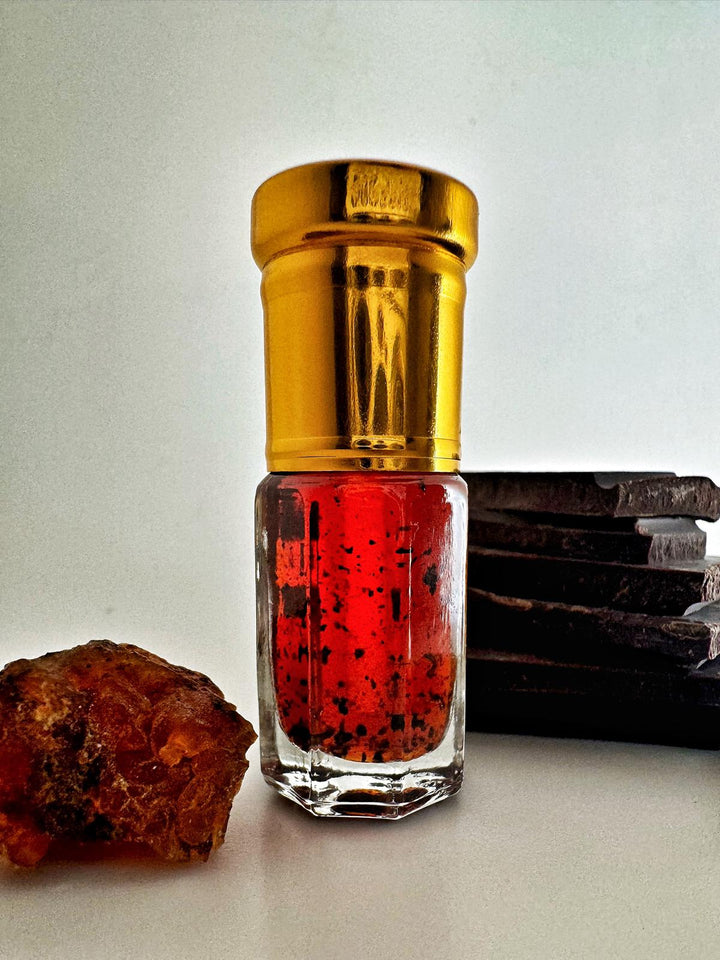
The older qualities in particular have transformed over time into extremely concentrated, dark, almost blood-red syrups. Some of these old materials were so viscous that they could only be removed from their containers with the greatest difficulty and had to be carefully warmed before processing.
Three of the patchouly qualities used come from Indonesia, complemented by an extraordinary Indian vintage quality.
The Indian patchouly from 2008 in particular is among the most unusual patchouly materials that AttarG has been able to work with so far.
Almost black.
Syrupy.
Intensely floral.
Pungent, narcotic and, in its own way, almost aphrodisiac.
Applied neat, such a concentrated vintage quality can quickly become overwhelming for sensitive noses.
Yet this is precisely where the art of the composition lies.
AttarG did not simply blend these extreme materials with one another. He embedded them in a structure in which vanilla, sandalwood, tonka, white blossoms and the balsamic as well as animalic natural materials catch their sharpness while at the same time preserving their characteristic personality.
The result is a patchouly that appears floral, balsamic, creamy, powdery, sweet and deep all at once.
And for all its complexity, it possesses an almost surprisingly familiar association:
If there were a patchouly chewing gum, it might smell exactly like this.
Refinement and quality
For Patchouly Rouge, several essences from our perfumer's personal treasure chest were used.
The vintage patchouly qualities in particular are materials that today can only be obtained with the greatest difficulty in comparable quality and maturity.
Some of these raw materials exist only in limited remaining quantities. Once such a material is used up, its original quality cannot simply be reordered.
The same applies to the animalic natural materials used.
Natural materials of this kind possess no industrial interchangeability. Even if a new batch were built in future with the same raw material designations, age, origin, maturation, harvest, processing and individual material character could differ so strongly from one another that an identical olfactory reproduction could not be guaranteed in good faith.
Precisely herein lies an essential difference between such a natural composition and industrially reproducible perfume concepts.
Patchouly itself is becoming increasingly difficult to obtain in correspondingly high qualities today. Especially exceptionally matured qualities from India are available only to a very limited extent.
Should we wish to open up this material quality on a larger scale again in the long term, this could one day even make another fragrance journey by Duftkumpels to India necessary.
Because some raw materials cannot simply be ordered.
You have to go where they come into being.
Exclusivity
Of Patchouly Rouge, a total quantity of approximately 850 ml was originally produced.
Part of this precious composition has, however, already been used for other Duftkumpels creations.
For the Walküre compositions alone, around 300 ml were used, among them:
Walküre Johanna
Walküre Brunhilde
as well as further quantities for individual bespoke compositions
Added to this are flacons already sold and further individual uses within our creations.
As of 22 September 2026, therefore, only approximately 300 ml of Patchouly Rouge remain.
What is available today as Patchouly Rouge thus comes from an already greatly reduced original stock of a formula whose character-defining vintage raw materials are not arbitrarily reproducible in this form.
When this stock is used up, the next batch does not simply begin.
Because with a composition like Patchouly Rouge, the raw material itself is part of the formula.
And some raw materials cannot be reordered.
Choose options
Shipping to Germany: €7,90 — free from €350,00
14-day return policyMade to order, 4-6 working daysHandcrafted in Hamburg