

Perfume Glossary A–Z: The Most Important Terms
Niche perfumery has its own vocabulary – often French, sometimes Arabic, occasionally English. This glossary explains the 30+ most important terms you will encounter in product descriptions, reviews and expert conversations. Sorted alphabetically, compactly worded.
A
Absolute — Highly concentrated plant fragrance material obtained by solvent extraction from flowers or resins. Denser and more floral than essential oils. Rose absolute is the prime example.
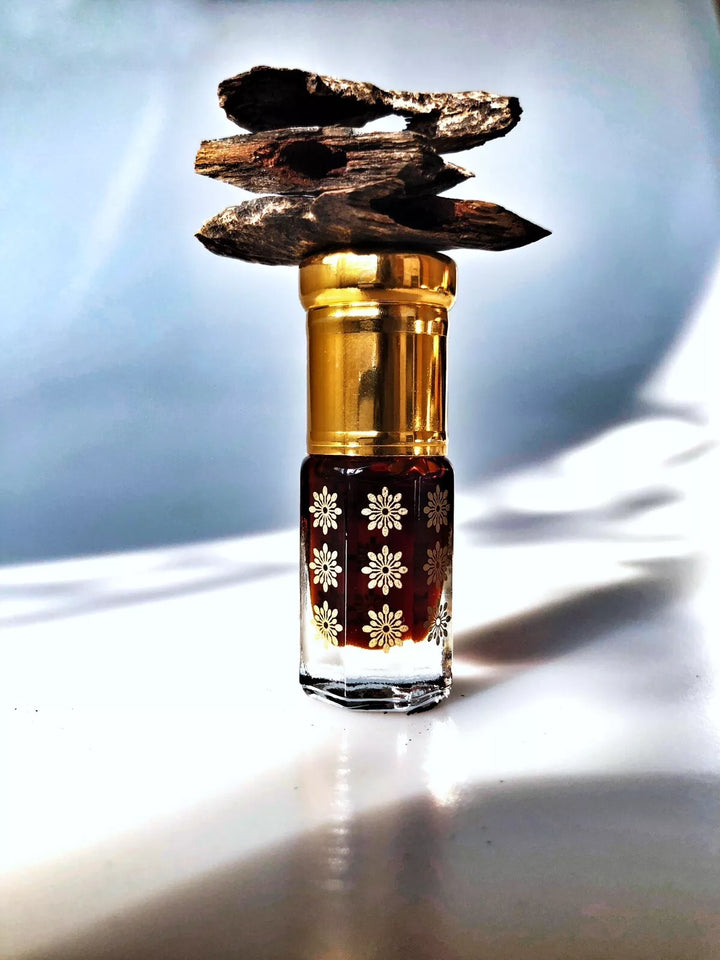
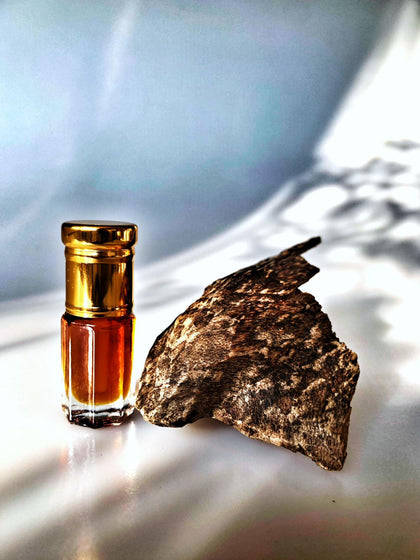
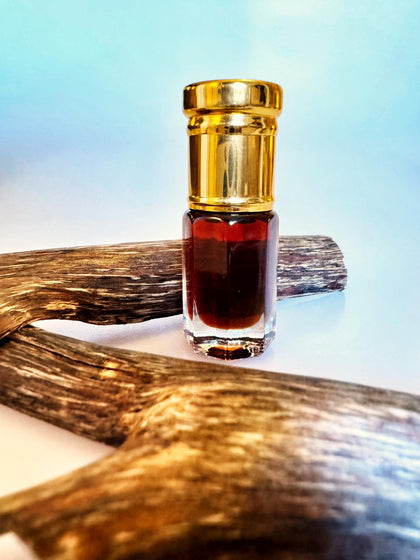
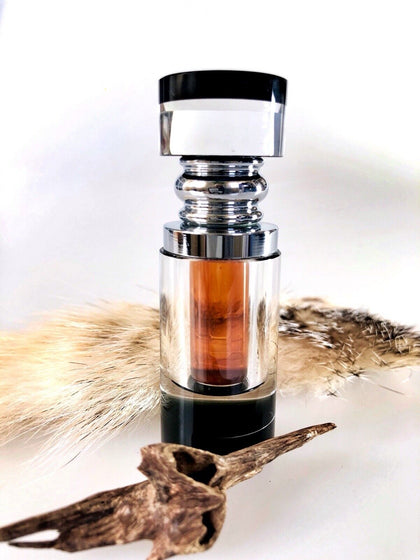
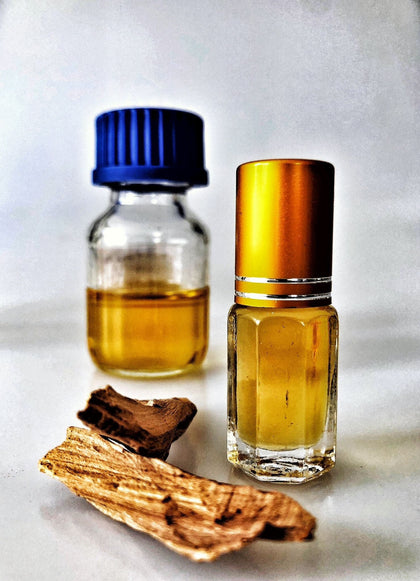
Agarwood — English name for the heartwood of infected Aquilaria trees; the source of Oud.
Accord — Harmonious blend of several individual notes into a "single scent impression". A floral accord of rose, jasmine and lily of the valley acts as a closed unit.
Ambergris (ambra) — Secretion of the sperm whale, matured in the sea for decades. Warm, marine, musky. One of the most expensive fragrance materials in the world.
Aquilaria — Genus of trees from Southeast Asia whose infected heartwood is distilled into oud.
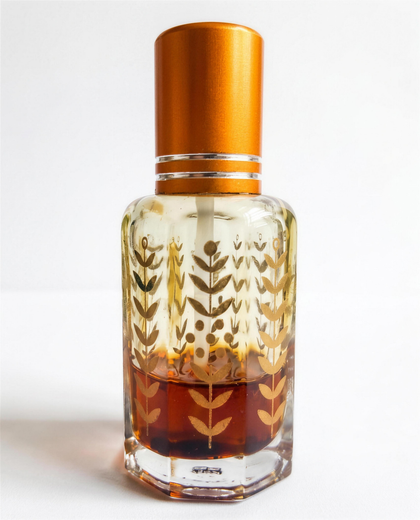
Attar — Traditionally alcohol-free perfume oil, often from the Middle East or India. See our attar collection.
B
Base note — The longest-lasting fragrance molecules of a composition: musk, ambergris, woods, resins. Appear after 3–6 hours and carry the fragrance for the rest of the day.
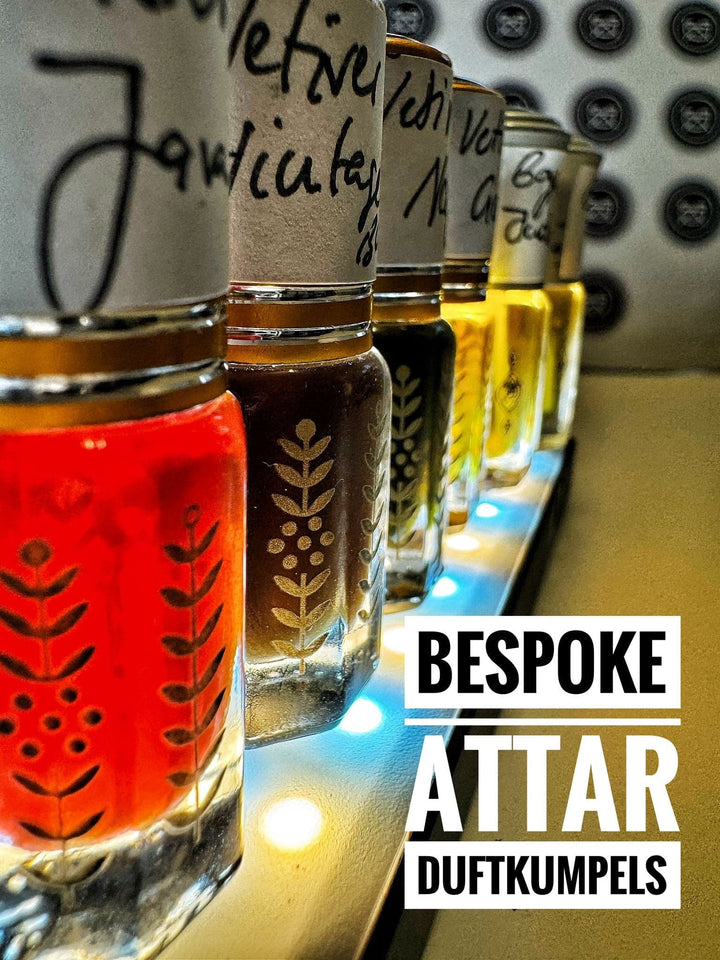
Bespoke — Made-to-measure fragrance for a single person. See Duftkumpels Bespoke.
Blotter — Test strip of untreated paper for assessing a fragrance without skin contact.
C
Castoreum — Gland secretion of the beaver. Leathery, smoky, warm. Historical component of all great leather perfumes.
Chypre — Classic fragrance family: bergamot, rose/jasmine, oakmoss, labdanum. Named after Coty's "Chypre" (1917). See Leather 4 LOVE! for a modern interpretation.
CITES — Washington Convention on International Trade in Endangered Species. Regulates trade in endangered species; in perfumery it concerns, among others, the musk deer and Aquilaria.
D
Decant — A portion transferred from an original flacon into smaller vessels, often 1–10 ml. Practical for testing without investing in a full flacon.
Deer musk — Gland secretion of the male musk deer. See Deer musk ethics.
Distillation — Obtaining essential oils by water or steam distillation. Standard for oud, rose, sandalwood.
E
Enfleurage — Historical extraction process: flowers laid on fat to absorb the scent. Practically extinct today, but sensorially unique.
Extrait de Parfum (XDP) — Highest fragrance concentration (25–40%). See What is extrait de parfum?
F
Fixative — Raw material that extends the longevity of other fragrance materials. Classic fixatives: ambergris, musk, benzoin.
Fougère — Fragrance family: lavender, coumarin, oakmoss, geranium. "Fern scent" (fougère = fern). Classically masculine.
G
Gourmand — Fragrance family with edible notes: vanilla, caramel, chocolate, tonka, coffee.
H
Longevity — How long a fragrance remains perceptible on the skin. Extrait typically 10–16 hours.
I-K
IFRA — International Fragrance Association. Regulates safety limits for individual fragrance materials.
Iso E Super — Synthetic fragrance material; woody, skin-close, transparent. Base of many modern compositions.
Top note — The most volatile fragrance molecules (citrus, herbs), perceptible for 0–30 minutes.
L-M
Labdanum — Resin of the rock rose. Warm, amber-coloured, tobacco-like. Foundation of many orientals.
Maceration — Maturation of a perfume composition after blending. At Duftkumpels 4–8 weeks.
Musk — Historically animal (deer musk), today often synthetic (white musk molecules, Galaxolide etc.).
N-O
Niche — Perfumery beyond the mass market. See Niche perfume FAQ.
Oud — Oil of the infected Aquilaria heartwood. Honey, animalics, smoke. See oud collection.
P-R
Perfumer — The creator of a fragrance composition. French "nez" (nose).
Pyramid — Top/heart/base structure. Historical model, increasingly complemented by linear compositions.
Rosa damascena — The most important perfume rose (Turkey, Bulgaria). 4 tonnes of petals = 1 kilo of rose oil.
S
Sillage — The scent trail a person leaves behind. French for "wake".
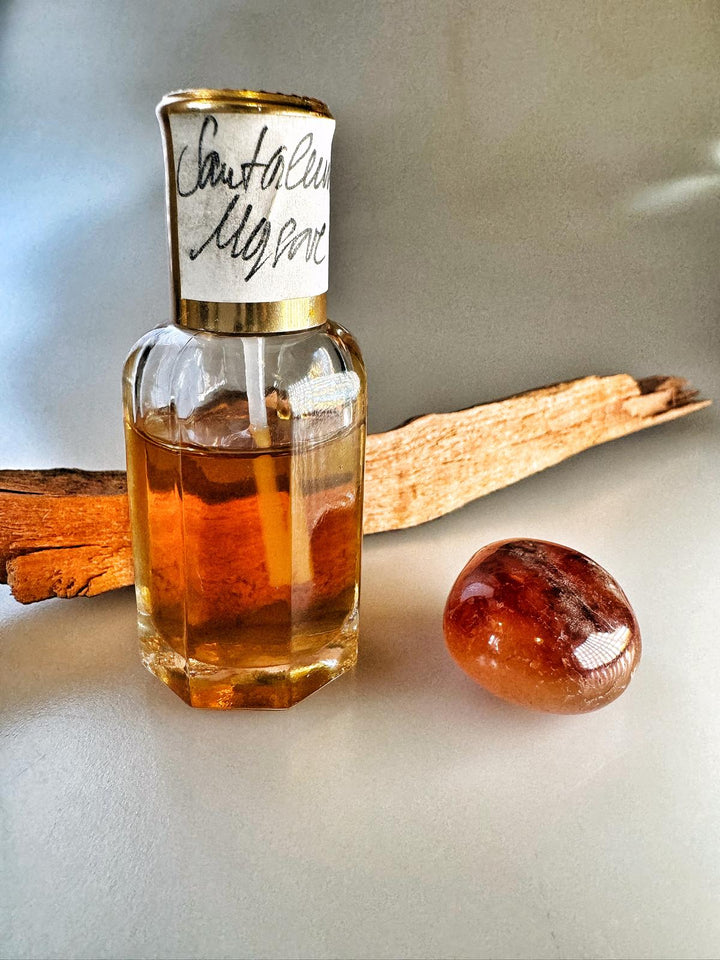
Sandalwood — Warm, creamy, sacred. Mysore (India) strictly protected; today mostly Australia or New Caledonia.
Synthetics — Chemically produced fragrance materials. Not inferior to naturals, but different tools.
T-Z
Tonka — Bean from South America. Warm, coumarin-like, sweet. Gourmand classic.
Vetiver — Grass-like root from Haiti or Java. Earthy, smoky, green.
XDP — Abbreviation for extrait de parfum.
Civet — Gland secretion of the civet cat. Animalic, warm, honeyed. Today mostly substituted synthetically.
Further guides: Buying oud, Ethical raw materials, Niche FAQ.