
Niche Perfume FAQ: All Frequently Asked Questions Answered
Niche perfume is a universe of its own – with its own rules, prices and philosophies. We have compiled the 18 most frequent questions that reach us in consultations, by e-mail and on Instagram. If your question is missing, write to us via our consultation.
Basics
1. What actually is a niche perfume?
Niche perfume is a fragrance that is not produced for the mass market. Characteristic are small editions, often natural or rare raw materials, an artistic rather than commercial attitude and the willingness to polarise.
2. What distinguishes niche from designer perfume?
Designer brands (Dior, Chanel, YSL etc.) produce fragrances meant to appeal to as many people as possible. The result is smoothed, market-tested compositions with 5–15% fragrance oil and prices of €80–150 for 100 ml. Niche produces for connoisseurs – higher concentration (often 20–40%), more unusual raw materials, smaller editions, and correspondingly higher prices.
3. Why are niche perfumes so expensive?
The material cost share is worlds higher. One gram of real oud oil costs €100–500 to buy. CITES deer musk, ambergris, Rosa damascena from Turkey – these are raw materials designer brands would never use because the calculation does not work. Niche lives on exactly these materials.
Raw materials and composition
4. Natural or synthetic – which is better?
Neither per se. Modern synthetics have revolutionised perfumery: Hedione, Iso E Super, Ambroxan are synthetic milestones. But pure natural fragrances have a depth and liveliness that cannot be reproduced synthetically. At Duftkumpels we work predominantly natural, but combine with synthetics where it benefits the scent.
5. What is the difference between extrait, EdP and EdT?
Concentration of the fragrance oil. EdT 5–15%, EdP 15–20%, extrait 25–40%. More in our guide What is extrait de parfum?
6. What is oud?
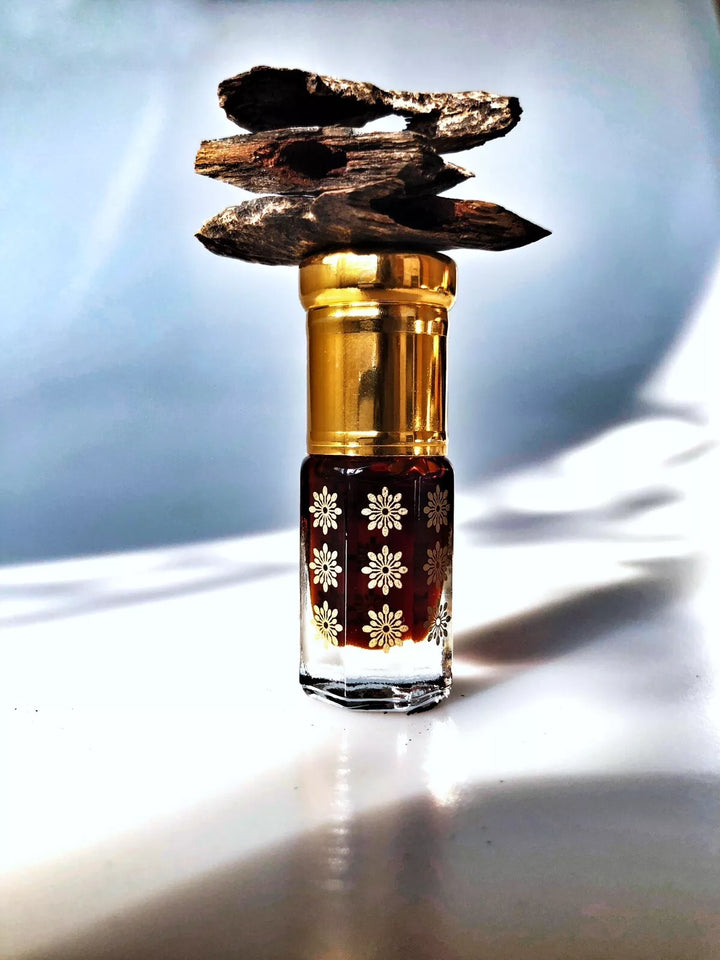
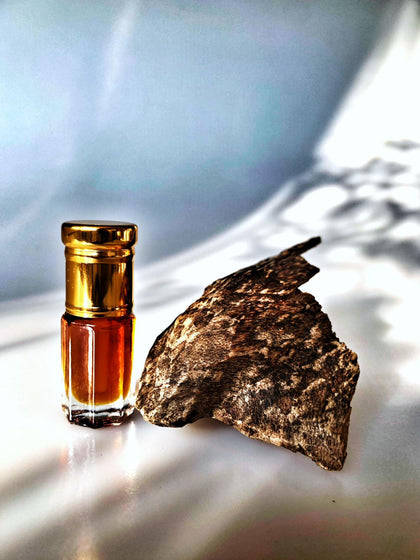
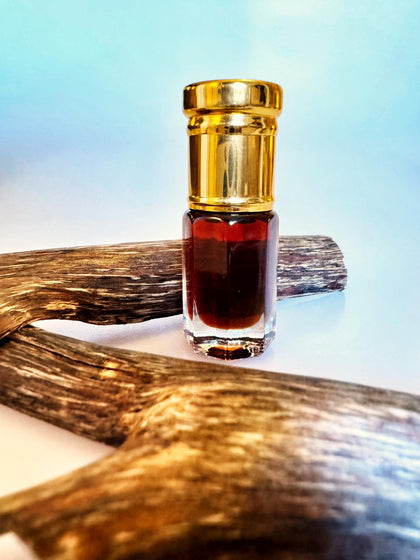
Oud is the oil of the infected heartwood of the Aquilaria tree. When the tree is attacked by a certain fungus, it produces a dark, resinous wood as a defence reaction – this is distilled. More in our oud buying guide.
7. What is deer musk?
The gland secretion of the male musk deer. We use exclusively CITES-certified, ethically obtained deer musk, for which no animal is killed.
8. Is ambergris ethically acceptable?
Yes. We use exclusively beach-found ambergris – a natural secretion of the sperm whale that matures in the sea for decades and is then found on coasts. No whale is hunted for it.
Buying, price and everyday use
9. How many sprays are right?
With extrait de parfum, 2–3 sprays are enough. Neck, wrists, inside of the elbows. More is not better – but intrusive.
10. How long does a flacon last?
A 30 ml extrait lasts 8–12 months at 2–3 sprays a day. A 10 ml about 3–4 months.
11. How do I store my perfume correctly?
Dark, cool, at a constant temperature. Not in the bathroom. Not on the windowsill. Ideally in the original box or in a cupboard. An opened bottle of extrait keeps for 5–10 years; some compositions even improve with storage.
12. Can I buy perfumes online unseen?
Better not. Always order a sample or a decant first. We offer samples for all fragrances. Body chemistry is individual – what works fantastically on a test strip can smell different on your skin.
Religion and ethics
13. Is extrait de parfum halal?
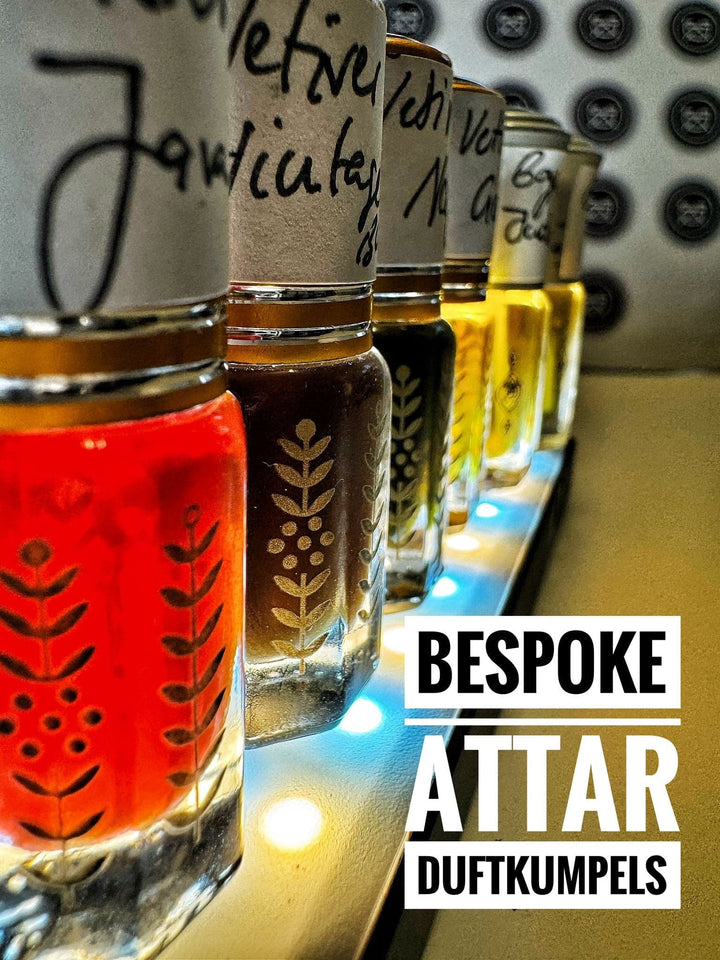
The majority opinion of the major schools of law regards alcohol in perfume (external, not drunk) as permissible. Anyone who wants to remain completely alcohol-free will find attars with us – oil-based perfumes without ethanol.
14. Is deer musk halal?
Yes, by consensus of the four schools of law. The Prophet ﷺ called musk the "best fragrance".
15. Are Duftkumpels perfumes vegan?
Not all. We use animal raw materials (deer musk, ambergris, castoreum) where they can be obtained ethically and are sensorially indispensable. But we also have purely plant-based and synthetic compositions in the collection.
Duftkumpels specifics
16. Where are Duftkumpels perfumes made?
In our atelier in Hamburg. Every flacon is blended, filled and numbered by hand.
17. How large are the editions?
Typically 20–100 flacons per batch. More under Limited editions.
18. Are there bespoke creations?
Yes. Our bespoke service develops individual fragrances for private individuals. From €299.