

How Long Does Perfume Last? The Essential Storage Guide
A good extrait de parfum is an expensive object, and the most common mistake collectors make is ignoring how quickly bad storage can ruin it. Properly stored, a fine niche perfume stays beautiful for years or even decades. Stored carelessly, the same bottle can be noticeably degraded in twelve months. This guide covers everything you need to know about perfume longevity: how long a fragrance actually lasts, what destroys it, and the simple rules that will protect your collection.
How Long Does Perfume Last, Really?
The short answer depends on concentration, composition and storage:
- Eau de toilette: 2 to 4 years when properly stored
- Eau de parfum: 3 to 5 years
- Extrait de parfum: 5 to 10 years, often longer
- Pure oud oil: Essentially indefinite; good oud improves for decades
- Attars (alcohol-free oil perfume): 10+ years, frequently improving with age
These are guidelines, not guarantees. A badly composed EdP can go off in a year; a beautifully composed extrait can last two decades. The storage environment matters far more than the label.
The Three Enemies of Perfume
1. Heat
Heat is the single greatest enemy of fragrance. Elevated temperatures accelerate every form of chemical degradation: top notes volatilise, esters hydrolyse, delicate florals go flat. A bottle stored near a radiator, in direct sunlight or in a bathroom will degrade five to ten times faster than one kept at cool room temperature.
Target: stable temperature between 15 and 22 degrees Celsius. Wine-cellar-style conditions are ideal for serious collectors.
2. Light
UV light breaks down organic molecules directly. Many aroma compounds are photosensitive, and a clear bottle sitting on a sunny shelf can develop off-notes within weeks. This is why most niche houses use dark glass or opaque outer boxes.
Target: keep bottles in their boxes, in a dark cupboard or drawer. Display bottles are charming; they are also being slowly destroyed.
3. Air
Oxygen oxidises top notes and changes the character of a fragrance over time. A fresh, bright opening can turn sour and "old" as oxidation progresses. The most vulnerable bottles are those that are mostly empty – less liquid means more air contact per molecule.
Target: minimise air exposure. For long-term storage of highly valued bottles, decant into smaller vessels as the level drops.
The Rules of Good Storage
Rule 1: Store Bottles Upright
Perfume on its side can degrade the atomiser seal and, in extreme cases, leak. Always upright.
Rule 2: Keep Bottles in Their Boxes
The outer box is a UV filter. Use it.
Rule 3: Avoid the Bathroom
Bathrooms cycle through temperature and humidity extremes every day. This is catastrophic for perfume. Store in a bedroom, dressing room, or dedicated cupboard instead.
Rule 4: Keep Away from Windows
Even a bottle labelled "kept in a drawer" will degrade if the drawer sits against a sun-warmed wall. Think about the actual thermal environment, not just the surface location.
Rule 5: Decant Older Bottles
When an extrait is down to its last 20 percent, decant into a smaller glass vial with minimal headspace. This reduces oxidation dramatically.
Rule 6: Refrigerate for Long-Term Storage
For bottles you are cellaring rather than wearing, a dedicated mini-refrigerator at 10 to 14 degrees Celsius is ideal. Do not store in a normal kitchen fridge – the temperature cycles with each door opening.
Special Cases
Pure Oud Oil
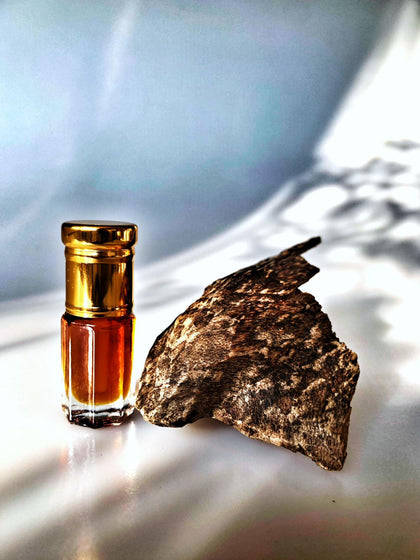
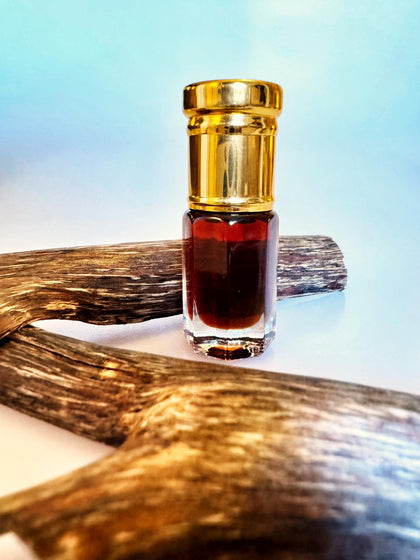
Oud oils like Oud Royal Thai Trat and Oud Royal Cambodi 2009 age extraordinarily well. Store upright, cool, dark, and tightly sealed. A 15-year-old oud is almost always better than the same oil fresh.
Ambergris Compositions
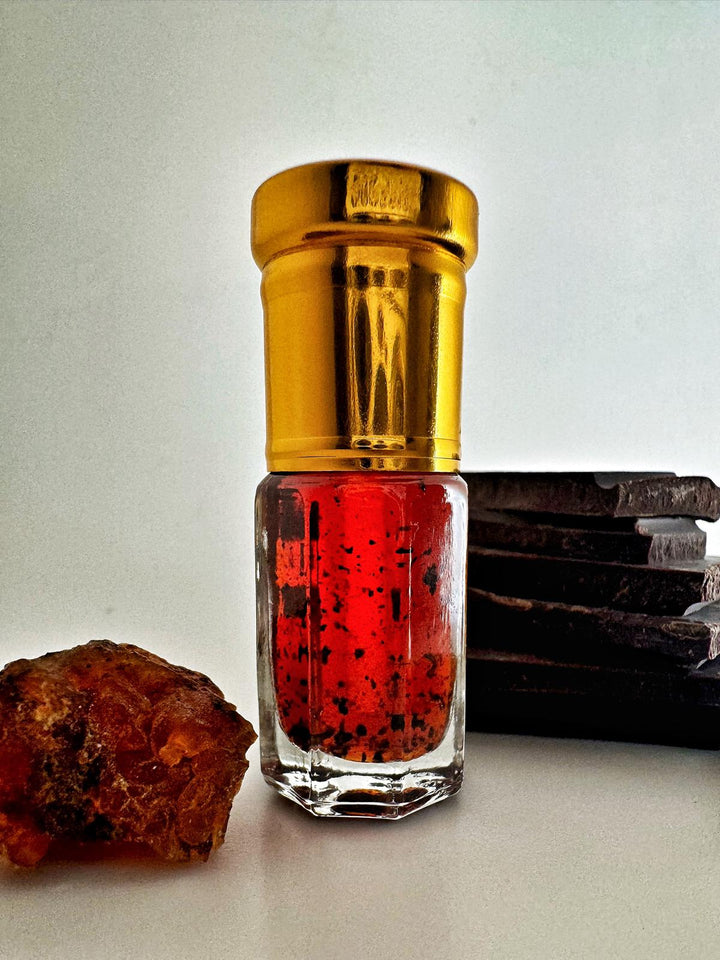
Extraits built around real ambergris tincture – like our Ambra al Hambra – continue to mature in the bottle. The tincture integrates further with the rest of the composition over time, and many collectors deliberately cellar these bottles for a year before wearing them.
Citrus-Forward Fragrances
Citrus compositions are the most vulnerable. Bergamot, lemon, and grapefruit oils oxidise quickly, and even well-stored citrus fragrances can show noticeable degradation after two to three years. Buy smaller sizes and use them.
Attars and Oil Perfumes
Oil perfumes are exceptionally stable. Stored correctly, a good attar improves for decades. Read more in our Attar Guide.
How to Tell if a Perfume Has Gone Off
- Colour change: darkening toward brown or amber (normal, usually harmless) vs cloudy or murky (concerning)
- Off-notes on opening: a sour, vinegary or "rubber" character where the top used to be fresh
- Loss of dry-down: the base notes feel thin, short-lived or disconnected
- Altered colour transitions: if the once-golden liquid is now green-brown, oxidation is advanced
A bottle with minor oxidation can still be wearable, particularly on clothing; a bottle with major off-notes should be retired.
Travel and Storage
Fragrance does not travel well. If you are flying with a bottle, keep it in hand luggage (subject to size rules) rather than checked luggage, where temperatures can swing dramatically. Never leave perfume in a hot car – even one sunny afternoon can damage a bottle permanently.
Our Hamburg Approach to Longevity
Every bottle that leaves our Hamburg, Germany atelier has been composed, macerated and bottled under controlled conditions. We include dark boxes for all extraits and recommend storage guidance with every shipment. Our extraits are designed to be cellared if desired – properly stored, they will still be beautiful in 2036. Read more about our craft or browse the extrait collection.


