
Perfume Layering – How to Combine Fragrances Correctly
Perfume layering – the art of wearing two or more fragrances together to create something new – has moved in the last decade from the fringes of the perfume world to its centre. Every major niche house now markets "layering" explicitly; every serious collector experiments with it; and social media has made a performance art of the process. But layering well is genuinely hard. Done right, it produces a signature no one else on earth wears. Done wrong, it produces a confused mess that smells like a panicked perfume counter. This guide explains the rules, the pairings that actually work, and how our Hamburg atelier approaches layering in its own compositions.
What Layering Actually Is
At its simplest, layering means applying two or more fragrances simultaneously – one as a base, one on top, sometimes more. The goal is not "stronger perfume" but a new composition, built on your skin, in real time, from existing bottles.
The tradition is ancient. Gulf perfumery has built entire ritual structures around layering – bakhoor incense under a musk-heavy attar, a rose oil over an oud base. Modern Western niche has imported and formalised this practice, and now sells fragrances that are explicitly designed to be layered with others in the same line.
Layering vs Scenting
Layering is not just applying perfume. Layering also includes:
- Scented body lotion or oil as a base
- Scented hair product
- Perfume on clothing vs on skin
- Incense or bakhoor in the room before dressing
All of these interact with your main perfume to produce the final olfactory signature.
The Three Rules of Good Layering
Rule 1: Start With a Base
Almost every successful layering combination begins with a base note anchoring the composition – oud, amber, musk or a warm gourmand. The lighter fragrance goes on top. Inverting this order rarely works.
Rule 2: Stay Within a Family (Mostly)
The easiest layering works within related olfactory families: oud + amber, rose + oud, vanilla + tobacco. Mixing aggressive aquatics with resinous orientals usually produces conflict. Beginners should start in-family and experiment outward only after building confidence.
Rule 3: Less Is More
Two fragrances can layer beautifully. Three becomes challenging. Four is almost always chaos. If you need more than three bottles to achieve a scent, the scent is not actually yours – it is a collision.
Layering Combinations That Work
Oud + Amber
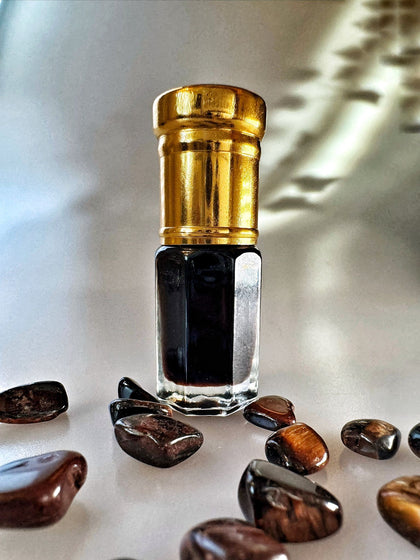
A drop of Oud Royal Thai Trat on the chest, followed by Ambra al Hambra on wrists and neck. The result is a warm, resinous, radiant composition that lasts all day and feels genuinely three-dimensional.
Oud + Leather
A drop of Oud Royal Cambodi 2009 under Leather 4 Love. The sweet honeyed cambodi transforms the leather, adding golden warmth to the castoreum backbone.
Musk + Warm Gourmand
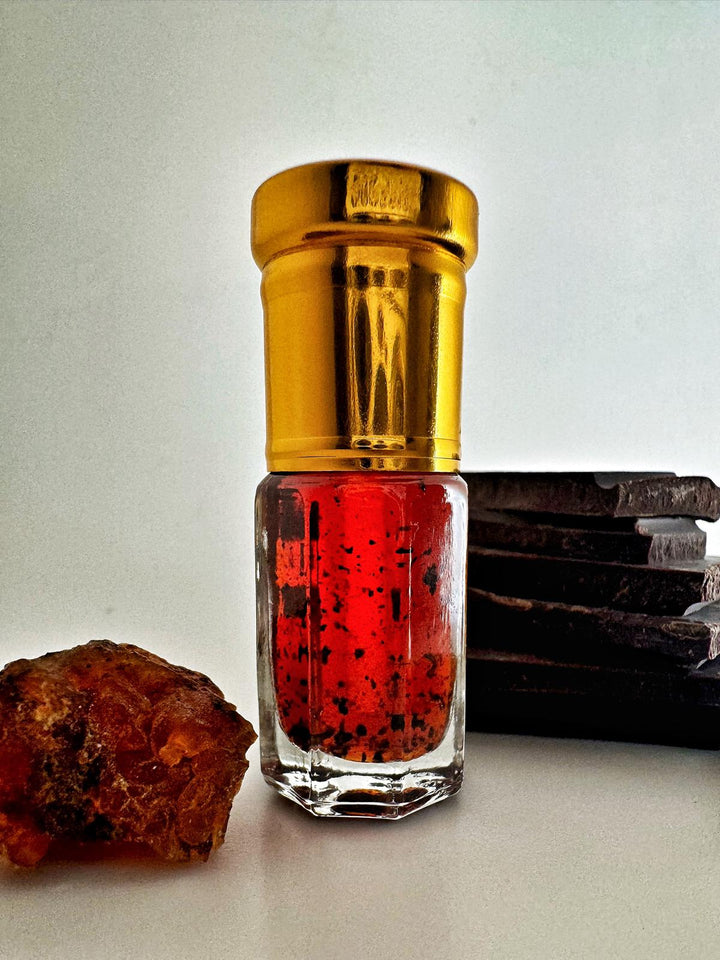
Musk al Khurasan XDP under Habana Cocoa. The radiant musk lifts the smoky chocolate composition, extending its wear and softening its edges.
Rose + Oud
A Gulf classic. Our Ambra al Hambra works beautifully under any rose-forward extrait, producing a composition reminiscent of classical mu'attir layering.
Oud + Oud
Yes, really. A drop of Thai oud under a Cambodian extrait, or vice versa, produces layered complexity no single-origin oud can match. This is advanced layering but genuinely rewarding for collectors with two or more oud bottles.
Combinations That Rarely Work
- Aquatic + Oriental: A crisp marine top over a heavy oud base produces dissonance, not contrast
- Citrus + Leather: The bright acidity fights the leather's warmth
- Two strong sweet gourmands: A vanilla over another vanilla reads as cloying
- Heavy musk + heavy civet: Too much animalic weight in a single wear
- Strong florals + strong florals: Floral confusion rather than complexity
Layering Technique: The Method
Step 1: Prepare the Skin
Moisturise with an unscented or lightly matching lotion. Dry, un-moisturised skin absorbs fragrance quickly and neutralises layering effects.
Step 2: Apply the Base
Use the heavier, slower-evaporating fragrance first. For pure oud oils, use a single drop on the chest or inner wrist. For an extrait, use one spray on the chest.
Step 3: Wait
Give the base two to three minutes to settle into the skin. This is essential. Applying the second fragrance immediately produces a muddled mixture rather than a layered composition.
Step 4: Apply the Top
Apply the lighter fragrance on top – same pulse points or adjacent ones. A single spray is usually enough.
Step 5: Do Not Reapply Either Layer
If the composition fades, apply more of the base on your chest or wrists and let the top refresh naturally. Reapplying both layers together generally disturbs the composition.
Layering for Different Occasions
Office
One spray of Tonkin Sunset XDP over a drop of sandalwood oil. Warm, close-to-skin, professional.
Evening and Formal
Ambra al Hambra over Oud Royal Thai Trat. Extraordinary depth without excessive projection.
Cold Weather
Al Hayvaan over Leather 4 Love. Dense, cathedral-like, made for wool and cashmere.
Summer Evening
Musk al Khurasan XDP over a drop of Thai oud. Luminous, skin-hugging, not cloying.
Layering and Skin Chemistry
Every layering experiment behaves differently on different skin. Warm, oily skin amplifies both layers; dry, cool skin can neutralise the lighter top. Test every combination on your own skin for a full day before judging. The result on a friend will never be identical to yours.
Building Your Layering Library
A minimal but powerful layering library for a serious collector:
- One warm base (Cambodian pure oud or Ambra al Hambra)
- One bright top (Thai pure oud or a fresh extrait)
- One leather or wood note (Leather 4 Love or sandalwood oil)
- One radiant musk (Musk al Khurasan XDP)
These four bottles, thoughtfully combined, produce dozens of different compositions.
Our Hamburg Approach to Layering
We design our extraits to layer well within the range. Tonkin Sunset, Ambra al Hambra, Leather 4 Love and Musk al Khurasan all share a compatible architecture – similar material qualities, complementary base structures, matching concentration levels. Browse the extrait collection or our oud oils, all handcrafted in Hamburg, Germany. For personal layering consultations, see our semi-bespoke programme.